



Information
|
Item |
Detail |
|
Name |
Smart home appliances, industrial control equipment, medical monitoring instruments, consumer electronic terminals, automotive electronic modules |
|
Composition of assembly objects |
Core components: PCBA control board, structural shell, display module, power module, core functional components, Standard parts: screws, clips, connecting wire harnesses, seals |
|
Production efficiency and cost |
Assembly capacity: Daily production capacity (8 hours, 500-3000 units for simple products, 100-300 units for complex products). Defect rate control: ≤1% (including appearance/function) |
|
Production process planning |
Drawing and BOM confirmation → Raw material procurement inspection → Processing/forming → semi-finished product inspection → assembly/welding → Functional testing → appearance treatment |
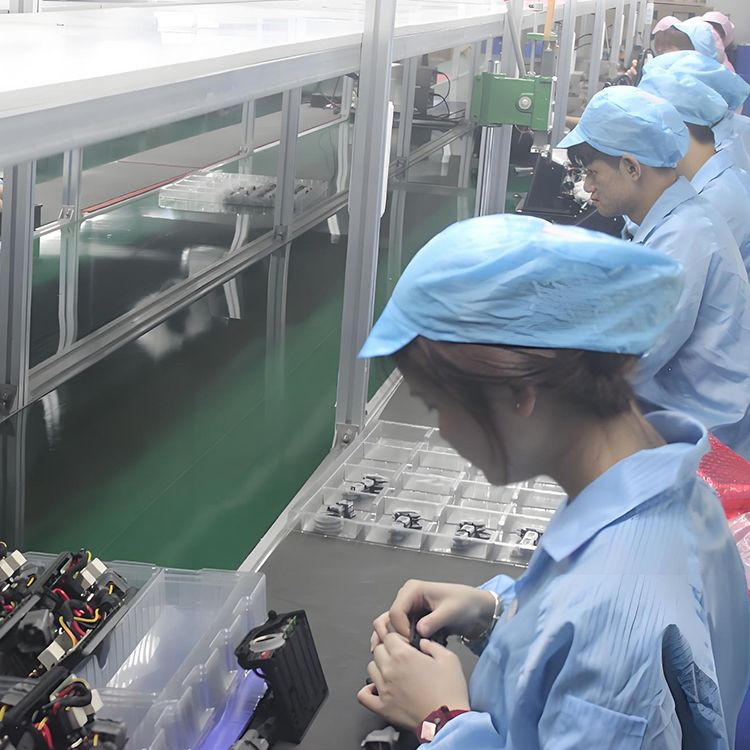
Finished product assembly is the final critical stage in manufacturing, where individual components, subassemblies, and modules are integrated into complete, ready-to-use products.into cohesive systems that meet design specifications and user expectations, spanning industries from consumer electronics to industrial machinery.
Core Assembly Processes
The assembly workflow is tailored to product complexity, combining manual precision with automated efficiency:
- Pre-Assembly Preparation: Components undergo final inspection to verify conformity with design standards-checking dimensions, surface quality, and functionality. Kits are prepared with all required parts to streamline the assembly process, reducing downtime from missing components.
- Sequential Integration: Follows a structured sequence to ensure proper fit and function. For example:
Attaching the PCB to the chassis with shock-absorbing gaskets.
Connecting display and cables via precision connectors.
Securing the rear casing with torque-controlled screws (to avoid over-tightening).
Installing buttons, cameras, and speakers in designated slots.
- Joining Techniques: Employs appropriate methods based on component type and durability requirements:
Mechanical fastening for easy disassembly and repair.
Adhesive bonding (epoxies, pressure-sensitive tapes) for lightweight or waterproof applications.
Welding (ultrasonic, laser) for permanent joins in metal components (e.g., automotive parts).
Soldering for electrical connections in wired components.
- Functional Testing: Validates the fully assembled product against performance criteria:
Electrical testing (power-up, signal transmission for portable devices).
Mechanical testing (button responsiveness, hinge durability, water resistance via IP rating verification).
Software integration checks (firmware activation, user interface functionality, connectivity with peripherals).
- Finishing and Packaging: Adds final touches such as applying labels, calibrating settings (e.g., screen brightness), and cleaning surfaces. Products are packaged with accessories (cables, manuals, warranties) in protective materials, ready for distribution.
Key Technologies and Capabilities
- Automated Assembly Lines: For high-volume products, such as inserting connectors or tightening screws-with precision and speed (up to 100 units per hour per line).
- Manual Precision Assembly: For complex or low-volume products, skilled technicians use specialized tools (tweezers, torque drivers, magnifying systems) to handle delicate components, ensuring accuracy in intricate joins.
- Flexible Workstations: Adaptable setups with modular fixtures accommodate product variants without major retooling, supporting small-batch or customized production runs.
- Traceability Systems: Barcode or RFID tracking of each unit throughout assembly, logging component lot numbers, operator IDs, and test results. This enables full traceability for quality audits or recall management.
Quality Control and Compliance
- In-Process Inspection: Checks at critical stages-such as after PCB integration or casing attachment-identify issues like misaligned components or loose connections before proceeding, reducing rework costs.
- End-of-Line Testing: 100% of finished products undergo comprehensive testing, including:
Stress testing.
Compliance verification.
User scenario simulation.
- Standards Adherence: Complies with industry-specific regulations, including ISO 9001 (general quality), IATF 16949 (automotive). Documentation includes assembly checklists, test reports, and compliance certificates.
Applications Across Industries
- Consumer Electronics: Assembles smartphones, laptops, smartwatches, and home appliances-integrating PCBs, displays,and casings into user-friendly devices.
- Automotive: Produces subassemblies and complete components with strict adherence to durability and safety standards.
- Industrial Machinery: Integrates motors, controllers, and structural parts into equipment like robots, 3D printers, and packaging machines-ensuring reliable operation in factory environments.
- Aerospace and Defense: Assembles avionics systems, communication devices, and defense equipment-with rigorous testing to withstand extreme temperatures, vibration, and pressure.
Advantages of Professional Finished Product Assembly
- Seamless Integration: Ensures components from diverse suppliers work together harmoniously, eliminating compatibility issues that could affect performance.
- Efficiency and Scalability: Balances automated and manual processes to handle production volumes from 100 to 100,000+ units, with quick ramp-up or scaling down based on demand.
- Cost Optimization: Reduces waste through lean assembly practices, minimizes rework via in-process checks, and leverages bulk purchasing of consumables (e.g., screws, adhesives).
- Quality Assurance: Delivers products that meet or exceed specifications, with consistent performance and reliability-enhancing brand reputation and customer satisfaction.
Finished product assembly is the culmination of the manufacturing journey, transforming fragmented parts into functional, market-ready products. By combining technical precision, quality focus, and adaptability, this process ensures that the final output meets both design intent and real-world usability.
FAQ
Q: What manufacturing services does DASHCONN provide?
A: Design and production for: automotive parts, consumer electronics, industrial components, digital products, pet supplies, household items, artificial intelligence, smart household solutions.
Q: What payment terms does DASHCONN support?
A: We accept bank transfers.
Q: Which are the available shipment types and transit times?
A: At DASHCONN, we understand that shipping plays a critical role in the success of your project. That's why we offer our customers two different modes of transport are available for selection: DHL, or using your own account to select a courier company or transport agent.
Hot Tags: industrial product assembly, China industrial product assembly manufacturers, suppliers, factory, automotive electroplating, cost of making an injection mold, injection mold design services, plastikote spray paint, services of silk screen printer, silkscreen print on plastic


