Information
|
Item |
Detail |
|
Name |
LED panel light module, RGB ambient light module, emergency lighting module, industrial three-proof light module |
|
Flow of production |
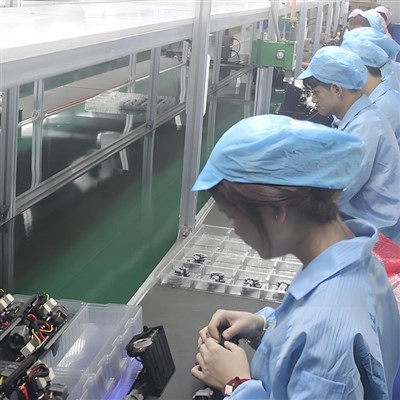
Material preparation stage: Raw material inspection (LED beads, PCB boards, power drivers, etc.), material cutting (PCB board separation, wire cutting)- Surface mount Technology stage: SMT assembly (soldering of LED beads, resistors, capacitors, etc.), reflow soldering (temperature curve control Preheat.- Assembly stage: Power-driven welding, wire connection (such as terminal crimping, solder fixation), housing assembly (screw fastening or snap connection)- Testing stage: Photoelectric performance testing, appearance inspection, reliability testing- Packaging stage: Anti-static packaging (for sensitive components), finished product boxing (including instructions and certificates of conformity) |
|
Production equipment |
Surface mount technology placement equipment: SMT placement machine, reflow soldering oven- Soldering equipment: Wave soldering oven, automatic soldering robot- Testing equipment: Integrating sphere, withstand voltage tester, constant temperature and humidity chamber- Assembly equipment: Automatic screw locking machine, dispensing machine, cutting machine |
|
Customized production options |
Specification Customization: Power customization (5W-200W), Size customization, Color Temperature Customization (single color/dual color/RGB adjustable)- Function Customization: Add dimming functions (PWM dimming), sensing functions, intelligent control- Material customization: Special shell materials , high color rendering index lamp beads (Ra≥95), explosion-proof design |
Details
As the core component of LED lighting products, lighting modules integrate light sources, optical elements, heat dissipation structures, and driver circuits. Their production process balances luminous efficiency, stability, and safety, with applications spanning home lighting, commercial lighting, outdoor lighting, and more. Below is an overview of the production process, technical features, quality control, and application fields.
Core Production Processes
The production of lighting modules undergoes systematic process design to ensure optical performance and reliability:
- Core Component Preparation and Selection: Key components include LED beads, optical lenses (PMMA, PC materials for concentrating or diffusing light), aluminum/copper substrates (for circuit carrying and heat dissipation), driver chips, and housings. LED beads are screened for luminous efficiency, color temperature deviation (±300K), and color rendering index (Ra≥80); lenses are tested for light transmittance (≥90%) and consistency of light distribution curves.
- Circuit Design and Welding: PCB circuits are designed based on power requirements. SMT technology is used to solder LED beads, resistors, capacitors, and other components onto the substrate, with pad accuracy controlled within ±0.1mm to avoid cold soldering or short circuits.
- Optical Light Distribution and Assembly: Automated equipment precisely attaches lenses above the LED beads, ensuring optical center deviation ≤0.5mm to meet designed light distribution angles. For intelligent dimming modules, wireless communication modules are integrated and connected to the driver circuit.
- Heat Dissipation and Structural Integration: Heat dissipation structures are designed according to power density. For example, heat is conducted to aluminum housings via heat pipes or vapor chambers, ensuring the module's junction temperature ≤65℃ during operation. Thermal resistance is tested during assembly to verify heat dissipation efficiency.
- Performance Testing and Packaging: Integrating sphere testers measure optical parameters such as luminous flux, color temperature, and color rendering index; aging test equipment performs 72-hour high-temperature (60℃) full-power aging to screen out early failure products. Final packaging meets protection level requirements, with outdoor modules typically reaching IP66 and indoor modules IP20.
Technical Features
- High Luminous Efficiency Optimization: Through LED arrangement designs and lens light distribution combinations, light utilization is improved.
- Intelligent Integration: Supports dimming and color tuning, sensor control, or intelligent linkage. Programming debugging during production enables multi-mode switching (e.g., color temperature continuously adjustable from 2700K to 6500K).
- Heat Dissipation Innovation: New heat dissipation materials and structural designs increase heat dissipation efficiency by 20% in the same volume, extending module lifespan.
- Modular Design: Supports standardized interfaces (e.g., magnetic, snap-on) for easy installation and replacement.
Quality Control System
- Full-Process Inspection: From raw material storage to finished product delivery, 3% of each batch undergoes full-item testing, including optical parameters, electrical safety, and waterproof performance.
- Compliance with Industry Standards: Meets international lighting standards such as CE certification, UL certification to ensure electrical safety and electromagnetic compatibility; outdoor modules must pass IK10 collision test to withstand 10J impact.
Application Fields
Lighting modules cover diverse lighting scenarios:
- Home and Commercial: Ceiling light modules, downlight modules, track light modules, supporting dimming and color tuning to adapt to different atmospheres.
- Outdoor and Municipal: Street light modules, landscape light modules , tunnel light modules.
- Industrial and Special: Industrial and mining light modules, explosion-proof light modules, plant growth light modules.
- Intelligent Lighting: Modules equipped with sensors can automatically adjust brightness, achieving energy saving and convenient control.
With the development of LED technology, lighting modules are upgrading towards high integration (COB packaging), intelligence (IoT interconnection), and personalization (custom spectra), with production processes continuously optimized to meet diverse lighting needs.
DASHCONN is a company specializing in product design & development, mold design & manufacturing, injection molding production, hardware components production, electronic design & production and assembly, with professional management system.
We also have rich experience in electronic design, layout, SMT, software logic programming and uploading.
We welcome you to collaborate with us in design and development, discuss and evaluate the possibility of mass production conversion, and support small batch production.
Hot Tags: optical module manufacturing service, China optical module manufacturing service manufacturers, suppliers, factory, access control design software, Manufacturing of optical module Service, Small mechanical components, Mechanical Components Accessories, Optical Module Manufacturing Service, lightbar Circuit Design